
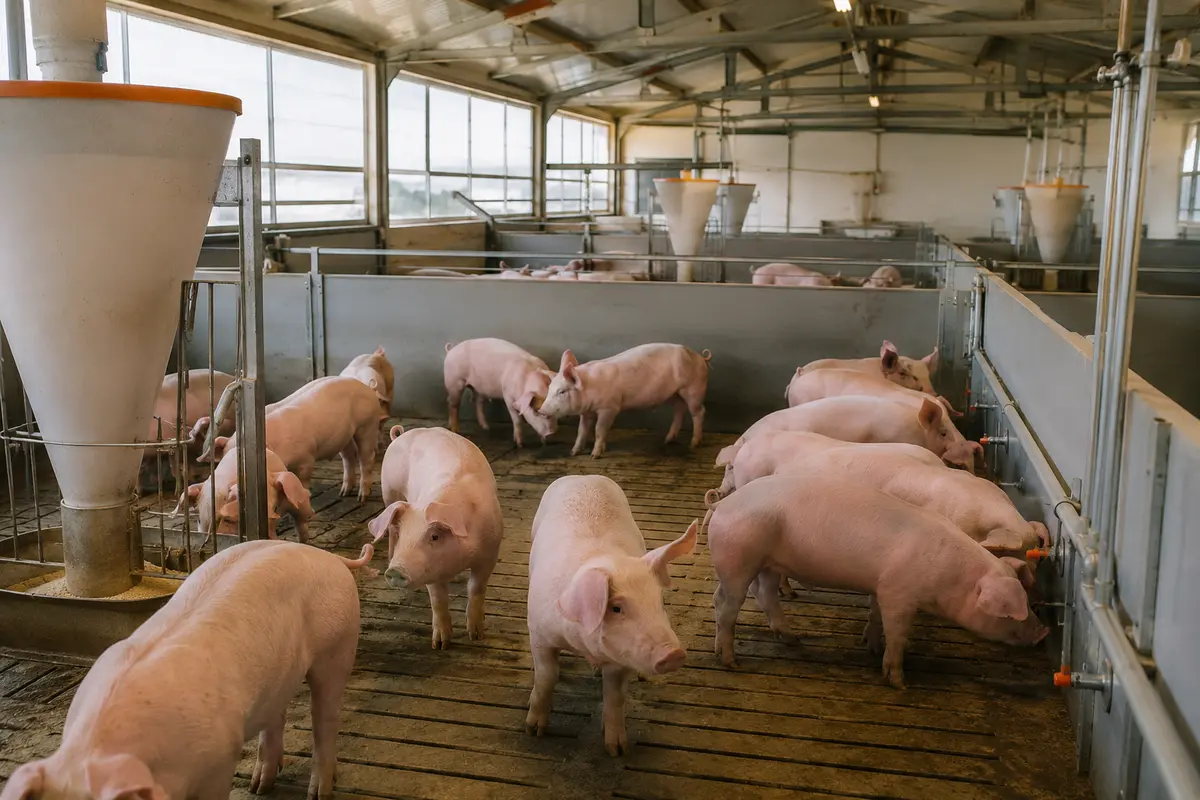
A low-cost feed is not necessarily economical, and a dense formulation is not necessarily successful. From 6 to 30 kg, the program must protect intake and gut stability while progressively reducing unnecessary complexity and cost.
Three phases, three different jobs
| Phase | Primary task | Main risks |
|---|---|---|
| 6–9 kg | Protect intake and the post-weaning transition | Low intake, digestive instability, abrupt raw-material change |
| 9–15 kg | Build stable growth without losing gut safety | Excess protein, poor digestibility, inconsistent phase change |
| 15–30 kg | Convert feed efficiently at controlled cost | Energy–amino acid imbalance, health pressure, feed waste |
Formulate with digestible nutrients and actual intake
Crude protein alone does not describe protein quality. SID lysine and the ratios of methionine, threonine, tryptophan, valine and isoleucine must be considered together with energy, available phosphorus, calcium, sodium, chloride and potassium. The target must reflect actual feed intake and genetic potential.
Control the non-formulation factors
Water flow, feeder adjustment, temperature, stocking, hygiene, health status and the timing of diet changes frequently explain more variation than a small difference in calculated nutrient density.
Use one economic denominator
Compare programs by feed cost per kilogram gain and by pigs reaching the target weight on time — not only by feed price per kilogram. Working targets such as 480–500 g/day ADG and 1.65–1.75 FCR must be interpreted against farm health, starting weight and cycle length.
Keep complexity where it protects intake and health; remove it only when the piglet, raw materials and farm conditions allow the change.