
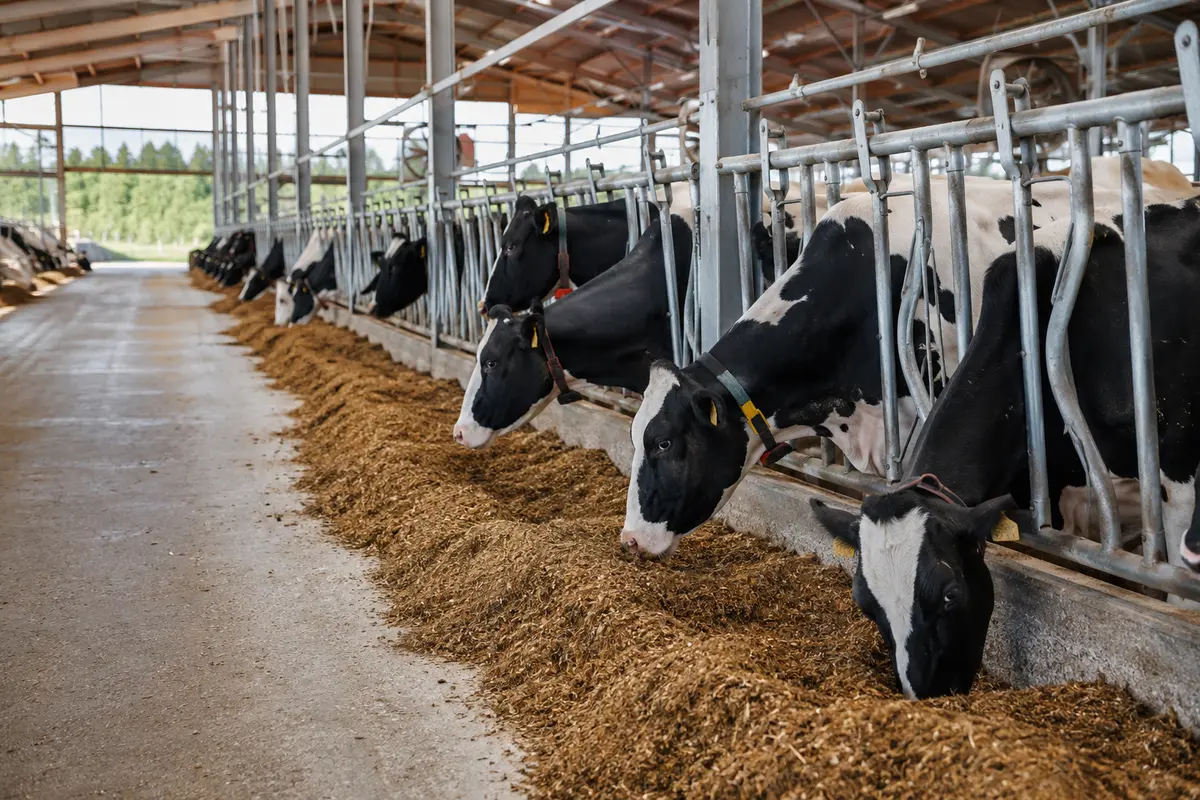
A TMR audit is not a second ration formulation. It tests whether the designed ration survives the entire process from storage to the cow. The useful question is not only what is in the formulation, but what each group receives and consumes every day.
1. Establish the real baseline
Begin with cow numbers, DIM structure, milk and components, actual DMI, refusals, current forage analyses, mixer capacity and feeding schedule. If dry matter and inclusion rates are assumptions, the formulation cannot be evaluated with confidence.
2. Follow twelve linked control points
These points are connected. Longer mixing cannot compensate for a wrong loading sequence, and a correct TMR cannot compensate for inadequate feed access or water.
3. Verify the ration at the feed bunk
Compare samples along the bunk, assess particle distribution, observe sorting over time and relate the findings to rumination, manure consistency, milk fat and intake. One sample taken from the mixer does not prove uniform delivery.
4. Connect biology with economics
The audit should end with a short list of actions ranked by expected effect, feasibility, cost and production risk. The objective is not maximum theoretical nutrient density; it is stable intake, rumen function, health, milk response and controlled feed cost.
A useful TMR audit produces a verified baseline, a prioritised risk list, corrective actions, responsibilities and KPIs for follow-up.